
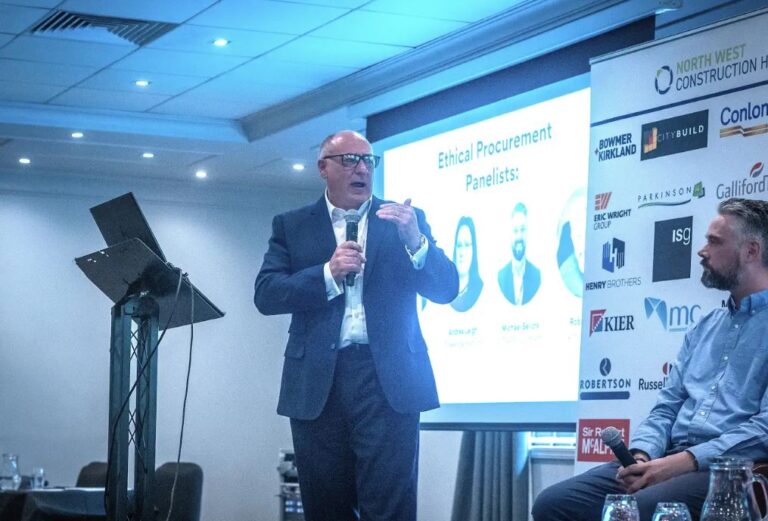
As part of the North West Construction Hub’s ongoing commitment to staying at the forefront of industry developments, we were excited to host the returning North West Construction Hub Client Engagement Event.
Mike Tyler, NWCH Business Development Manager, reflects on the latest NWCH Client Engagement Event, this time addressing three new critical industry topics: RAAC, Biodiversity Net Gain, and Ethical Procurement. By bringing together thought leaders and industry experts, we aimed to foster discussion, collaboration, and innovation, and drive forward best practices.
Introduction
The North West Construction Hub (NWCH) recently held its second Client Engagement Event, marking the beginning of what will now be an annual occasion in the industry calendar. The event, which forms a key part of NWCH’s ‘informed framework’ objectives, brought together experts and professionals to explore three crucial topics shaping the future of construction: RAAC (Reinforced Autoclaved Aerated Concrete), Biodiversity Net Gain, and Ethical Procurement. Mike Tyler reflected on the event, “As the event’s opening speaker, I was pleased to reflect on the challenges and triumphs of the past 12 months in the construction industry. The focus of my opening remarks was on how we, as a collective, can address the hurdles faced by client and project delivery teams week after week. The event kicked off with a thought-provoking discussion on these issues and how best to approach them.
Following my address, Peter McDermott took the stage to highlight the ‘Gold Standard’ framework objectives and introduced the new Procurement Act, which will come into effect in October 2024. These foundational discussions set the tone for the rest of the event, which aimed to not only reflect on past challenges but also to pave the way for a more integrated future.
RAAC: Complexities and Unknowns
The first keynote speaker of the day, Craig Capewell from Robertson Construction, opened the discussion on RAAC. His presentation delved into the complexities of working on live sites, particularly in addressing the ‘potential unknowns’ that arise with RAAC-related projects. Craig highlighted the fact that there is no one-size-fits all solution to RAAC delivery, sharing real-world examples of ongoing RAAC projects.
A subsequent panel discussion, featuring insights from a client, cost consultant, and industry innovator, explored the scope of RAAC’s use. While acknowledging the material’s challenges, the panel clarified that not all RAAC presents a risk. Proper maintenance and installation were emphasized as essential to mitigating potential hazards. Discussions also covered the ‘replace or repair?’ dilemma, with a strong focus on cost control measures and ensuring that risk is minimized throughout the process.
Biodiversity Net Gain: Enhancing the Built Environment
Next on the agenda was Biodiversity Net Gain (BNG), an increasingly important topic in sustainability, especially in light of new legislation passed in March requiring a minimum 10% net gain in biodiversity for most development projects. To gauge the audience’s understanding of the topic, we began with a live poll. Following this, Morgan Taylor, a director at Greengage Environmental, provided a keynote address on what BNG is, why it matters, and how it affects projects in practice. For me, one of the key takeaways was that BNG isn’t simply a “tick-box” exercise—it’s an opportunity to meaningfully integrate nature into the built environment, benefiting people, communities, and the environment as a whole.
The panel discussion that followed included perspectives from local government planning, ecology consulting, and landscape architecture, with a consensus that while BNG presents great value to projects, industry concerns remain, which will need to be addressed moving forward. The overall sentiment was that this new legislation is a positive step forward for creating a built environment that not only preserves nature but actively enhances it?
Ethical Procurement: A Focus on
People and Sustainability
The final session of the morning shifted focus to Ethical Procurement, where Zoe Brooke from Save the Construction Initiative delivered a powerful presentation on the true costs of procurement—not just commercially, but psychologically. Zoe’s insights on the human impact of procurement practices were thought-provoking, setting the stage for a passionate panel discussion. This panel, comprising senior public sector procurement experts, a legal public sector specialist, and a national Framework Director for a main contractor, examined the importance of sustainable levels of Overheads and Profit (OH&P) across the industry. There was a unanimous agreement that moving away from the “lowest price” tendering approach is vital to reducing risks for clients, contractors, and the supply chain. Ethical procurement was framed as a responsibility that clients must consider before choosing a procurement route, emphasizing due diligence and governance as key to achieving a more sustainable and ethical construction sector.
“It was a morning of insight and knowledge and a great example of how you are pursuing ethical in an holistic sense”
Conclusion and Looking Ahead
The event concluded with a closing address by Jared Allen, Director of Capital Programmes at Manchester City Council, who reflected on how industry knowledge can be harnessed by breaking down barriers and supporting fellow public sector organisations. The themes of integration, early engagement, and behavioural change were prevalent throughout the day, underscoring the importance of collaboration and proactive action within the sector. The NWCH team is committed to supporting these industry shifts and will continue to evaluate how best to guide and assist the sector. Over the coming weeks, we will be releasing more information from the event, as well as updates from our contractor-led Special Interest Groups, so be sure to keep an eye on our
website and LinkedIn pages for more.
Finally, I would like to extend my heartfelt thanks to our framework contractor partners for
their continued support in hosting this event. Their contributions, along with the expertise shared by our keynote speakers and panellists, made the day a resounding success.